
Contact Us
Blog
Does My Child Have Dyscalculia? Signs to Look for by Grade Level
Something is not adding up. Your child works hard, pays attention, and tries — but math just is not clicking the way it should. You are starting to wonder if there is something more going on.
That instinct is worth listening to.
Dyscalculia is a neurological learning difference that affects how the brain processes numbers and mathematical concepts. It is as common as dyslexia, but far less recognized — which means many children go years without answers or the right support.
This post is not a diagnostic tool, and nothing here should be taken as a determination of whether your child has dyscalculia. Only a qualified professional, a neuropsychologist or educational psychologist, can make that determination through a formal evaluation. What this post can do is help you identify patterns that are worth bringing to a professional's attention.
If you are seeing several of these things together and they persist over time, that is a conversation worth having.
What Is Dyscalculia?
Dyscalculia is a specific math learning disability — a neurological difference in how the brain processes numbers and mathematical concepts. It is recognized by the same research and clinical communities that identify dyslexia, and it affects approximately the same number of people. Despite that, far fewer families have heard of it, and far fewer children receive the support they need.
Dyscalculia is not about effort or intelligence. Children with dyscalculia are often bright, verbal, and capable in many areas — but their brains process numerical information differently. They may struggle to understand what numbers mean, how they relate to each other, and how mathematical operations actually work.
It is also not the same as math anxiety, though the two often go hand in hand. Math anxiety is an emotional response. Dyscalculia is a processing difference that exists whether or not a child feels anxious. Many children develop math anxiety as a direct result of years of struggling without understanding why.
What to Watch for by Grade Level
One of the challenges with dyscalculia is that it can look different at different ages — not because earlier signs disappear, but because the demands of math instruction change. A child who struggled with foundational number concepts in kindergarten carries those gaps forward. In the upper grades, those same gaps show up in new and more complex ways.
Kindergarten through Grade 2
In the early grades, dyscalculia often shows up as difficulty with the most foundational number concepts — the building blocks that most children absorb naturally.
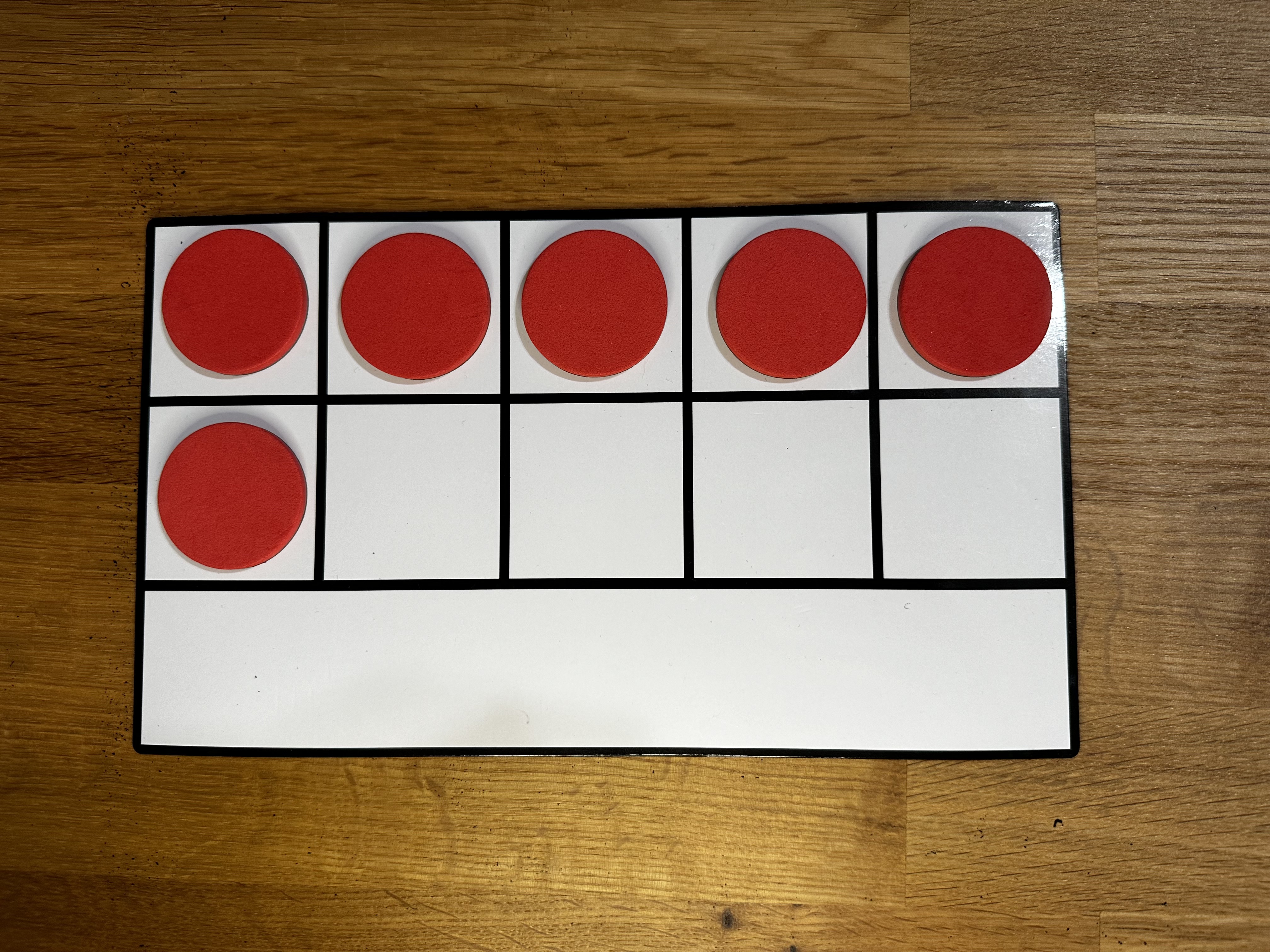
Some things worth paying attention to:
Difficulty counting objects reliably, even small quantities (losing track, skipping numbers, or counting the same object twice)
Trouble recognizing that a group of three objects is "three" without counting each one individually — this skill is called subitizing, and difficulty with it is one of the earliest patterns associated with math learning differences
Struggling to learn to write numbers, or frequently reversing them beyond the age when reversals are typical
Difficulty understanding that numbers have a consistent order and that each number is one more than the one before
Trouble connecting the word "five" to the numeral 5 to a group of five objects
Relying heavily on fingers for counting long after classmates have moved on
These patterns are easy to miss in young children because development varies widely. What matters is whether several of these show up together and persist over time.
Grades 3 through 5
By third grade, math instruction shifts from building number sense to applying it — addition and subtraction with regrouping, multiplication, division, fractions, and word problems. For a child who did not fully develop foundational number sense in the early grades, this is often where the gap becomes more visible.
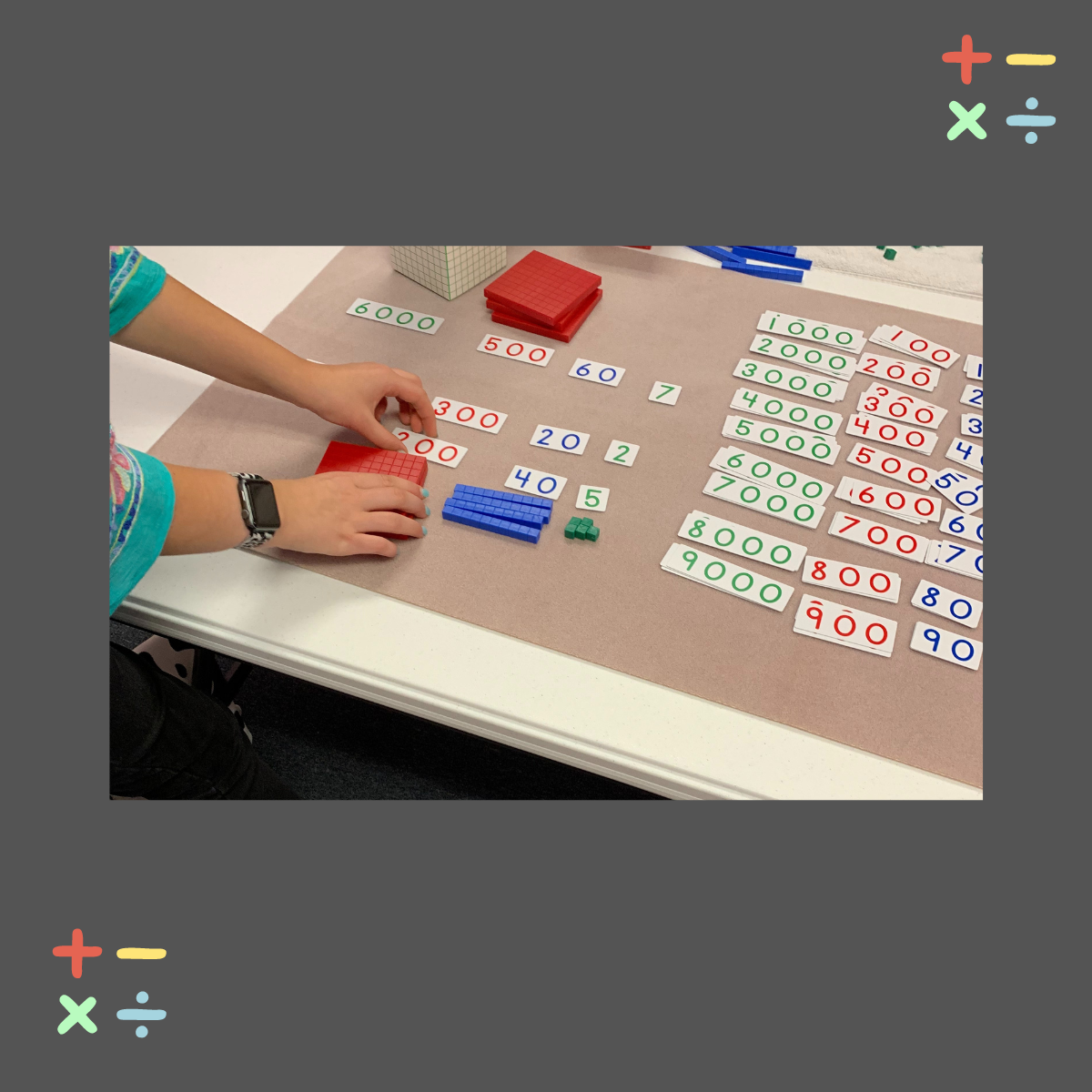
Some things worth paying attention to:
Difficulty with regrouping in addition and subtraction — understanding why and how to "carry" or "borrow" requires a solid grasp of place value that many students with dyscalculia have not yet developed
Difficulty memorizing basic math facts despite significant practice (multiplication tables in particular)
Struggling to understand place value — what makes 24 different from 240, and why position determines the value of a digit
Trouble with word problems, particularly knowing which operation to use
Losing track of steps in multi-step problems
Difficulty understanding fractions as parts of a whole
Avoiding math tasks or becoming visibly upset before starting them
Inconsistency — getting something right one day and appearing to have no memory of it the next
The inconsistency piece is worth noting. Parents often wonder whether their child is being careless or not trying. When a child genuinely understands something one day and cannot access it the next, that inconsistency is worth bringing to a professional's attention.
Not Sure If What You Are Seeing Is Worth Pursuing?
If you are recognizing your child in these descriptions, our free guide walks through the five most common signs associated with dyscalculia — with clear, practical explanations that can help you decide whether to seek a formal evaluation.
Download the free guide: 5 Signs Your Child May Have Dyscalculia
Middle School
Middle school math moves quickly — fractions, decimals, percentages, ratios, pre-algebra — and a student who has been carrying foundational gaps from the early grades often arrives here with a significant deficit. The earlier difficulties do not go away. They compound.
Some things worth paying attention to:
Continued difficulty with place value, including decimals, and what digits to the right of the decimal point actually represent
Continued difficulty with fractions, decimals, and percentages, even after repeated instruction
Trouble understanding negative numbers and what they mean
Difficulty with multi-step problems and keeping track of where they are in a process
Struggling to estimate or judge whether an answer is reasonable
Difficulty reading charts, graphs, and tables
Trouble with time — reading analog clocks, estimating how long things take, managing a schedule independently
Significant avoidance, anxiety, or shutting down around math
By middle school, some students have developed workarounds that can make the underlying difficulty harder to see. They may be getting by, but the effort required is disproportionate to the results — and that gap is often visible to parents even when it is not reflected in grades.
High School
In high school, the same foundational processing differences show up in more complex material. Algebra, geometry, and higher math courses become significant barriers, and the impact can extend into daily life.
Some things worth paying attention to:
Difficulty understanding algebraic concepts, particularly what variables represent
Trouble with geometric reasoning and spatial relationships
Struggling to connect formulas to what they actually mean
Difficulty managing money, making change, or understanding financial concepts
Trouble with standardized test math sections, even with significant preparation
A notable discrepancy between performance in math and performance in other subjects
Avoiding electives or future plans that involve math, even when there is interest
It is also worth knowing that dyscalculia does not resolve on its own after high school. College students and adults continue to experience the same processing differences, though the challenges often look different in adult contexts.
What to Do If You Are Seeing These Patterns
Noticing these patterns is an important first step. Here is what we recommend:
Talk to your child's teacher. Share what you are observing at home and ask what they are seeing in the classroom. A teacher's perspective can help you build a fuller picture.
Request a formal evaluation. A neuropsychologist or educational psychologist can evaluate your child for dyscalculia and other learning differences. This is the only way to know for certain what is going on — and a formal diagnosis opens doors to accommodations and appropriate support.
Seek specialized help. If dyscalculia is identified, look for a tutor specifically trained in dyscalculia and multisensory math instruction. This is a different skill set from general math tutoring, and it makes a meaningful difference in outcomes.
The earlier intervention begins, the better — but students at every stage can make meaningful progress with the right support.
Download the Free Guide
If you want a clear, simple reference to help you decide whether to pursue an evaluation, our free guide covers the five most common signs associated with dyscalculia — written for parents, not specialists.
Get the free guide: 5 Signs Your Child May Have Dyscalculia
If your child has recently received a dyscalculia diagnosis and you are wondering what to do next, this post walks you through five concrete steps to take right away.
At Exponential Potential, we specialize exclusively in dyscalculia tutoring using the CRA multisensory method. If your child has received a diagnosis and you are wondering what comes next, we offer a free consultation to help families understand their options.

We love hearing from families who are ready to take the next step in supporting their child's math journey. Whether you have questions about dyscalculia, want to learn more about our multisensory approach, or are ready to schedule a free consultation, we're here to help. Every family's situation is unique, and we look forward to learning about yours.


