
What to Do After a Dyscalculia Diagnosis: Your Next 5 Steps
You just received confirmation that your child has dyscalculia. You have a report, a diagnosis, and probably a complicated mix of feelings: relief that there is finally an answer, uncertainty about what comes next, and maybe some worry about what this means for your child's future. That is a lot to process at once.
The good news is that dyscalculia is well understood, and there is a clear path forward. This post walks you through five concrete steps to take in the weeks following a diagnosis so you can move from overwhelm to action.

Step 1: Understand What the Diagnosis Actually Means
Before you can advocate for your child, talk to their teacher, or find the right support, it helps to have a clear picture of what dyscalculia actually is and what it is not.
Dyscalculia is a specific math learning disability. It is neurological, meaning it is not caused by a lack of effort, low intelligence, or insufficient instruction. Your child's brain processes numerical information differently, and that difference does not go away with more practice or harder work using the same approaches that have not been working.
It is also important to understand that dyscalculia is not a life sentence. With the right intervention, students with dyscalculia can build genuine mathematical understanding, not just workarounds but real competence, and the research on this is clear and encouraging.
It is also worth knowing that dyscalculia affects more than math class. Time management, money, reading schedules, and understanding quantities in daily life can all be affected. Knowing this helps you see your child's full picture more clearly and advocate for support in areas that go beyond academics.
If you want to go deeper on what dyscalculia is and how it affects the brain, our post What Is Dyscalculia? Signs, Symptoms, and How to Get Help is a good place to start.
Step 2: Talk to Your Child About the Diagnosis
This is a step that many parents feel uncertain about. How do you explain a learning disability to a child without making them feel labeled or discouraged?
The key is framing. A diagnosis is not bad news. It is clarifying news. Your child has been working hard and struggling, often without understanding why, and now you both have an answer.
A few things to keep in mind when having this conversation:
Match your language to your child's age. For younger children, something simple works well: "Your brain learns math differently than some other kids, and we are going to find people who know how to teach you in a way that works for your brain." For older students, you can be more direct and involve them in the process of finding support.
Emphasize what the diagnosis explains, not what it limits. Help your child understand that the struggles they have experienced make sense now, and that the right help can change things.
Be honest about what comes next. Children do better when they feel informed rather than managed, so let them know what steps you are taking and why.
Listen. Your child may have complicated feelings about the diagnosis, too, so give them space to ask questions and express what they are thinking.
The goal of this conversation is not to have all the answers. It is to help your child feel seen, understood, and supported.
Step 3: Talk to Your Child's Teacher
Once your child has a diagnosis, their classroom teacher needs to know. Not just what the diagnosis is, but what it means for what they are already seeing in the classroom.
A teacher who understands dyscalculia can connect the diagnosis to specific behaviors and academic patterns they have been observing. Why does this student avoid starting math work? Why do they seem to understand something one day and forget it the next? Why does the frustration sometimes look like defiance? A diagnosis provides the explanation a teacher needs to respond differently and more effectively.
When you meet with the teacher, come prepared to share a brief explanation of what dyscalculia is and how it affects math learning, specific examples of what your child struggles with that the teacher may be seeing in class, and what kinds of support and adjustments tend to help students with dyscalculia.
It is also worth asking the teacher what they have been observing, since their perspective is valuable and they will be an important part of your child's support team going forward. A teacher who feels informed and included is far more likely to become an advocate for your child than one who feels blindsided by a diagnosis they were not prepared for.
Step 4: Request Accommodations at School
Talking to the teacher is an important first step, but formal accommodations require a separate process that goes beyond the classroom. Depending on your child's school and the nature of their needs, accommodations may be provided through a 504 plan or an Individualized Education Program (IEP).
To begin this process, submit a written request to your school's special education coordinator or principal asking for an evaluation for accommodations. Having the neuropsychological evaluation report in hand strengthens this request significantly.
Some accommodations that are commonly helpful for students with dyscalculia and worth asking about include:
Extended time on math tests and assignments
Access to a number line to support understanding of number relationships, sequencing, and operations
Use of a calculator for computation so the focus can be on concepts rather than arithmetic
Access to a multiplication chart or table to support fact retrieval, allowing the focus to remain on mathematical concepts and problem-solving rather than memorization
Access to graph paper or visual organizers to help with place value and multi-digit work
Reduced number of problems, demonstrating mastery on fewer problems rather than completing a full set
Oral testing as an alternative to written math assessments
Preferential seating to minimize distractions during math instruction
Access to manipulatives during class and on assessments

Every child is different, and the accommodations that make the most difference will depend on your child's specific profile. Use your neuropsychologist's report as a guide, since it will often include specific recommendations that you can bring directly to the school. Be prepared for this process to take time and persistence, and document everything in writing and follow up consistently.
Step 5: Find a Specialist
Classroom accommodations level the playing field, but they do not address the underlying processing differences that make math hard for students with dyscalculia. For that, your child needs specialized tutoring.
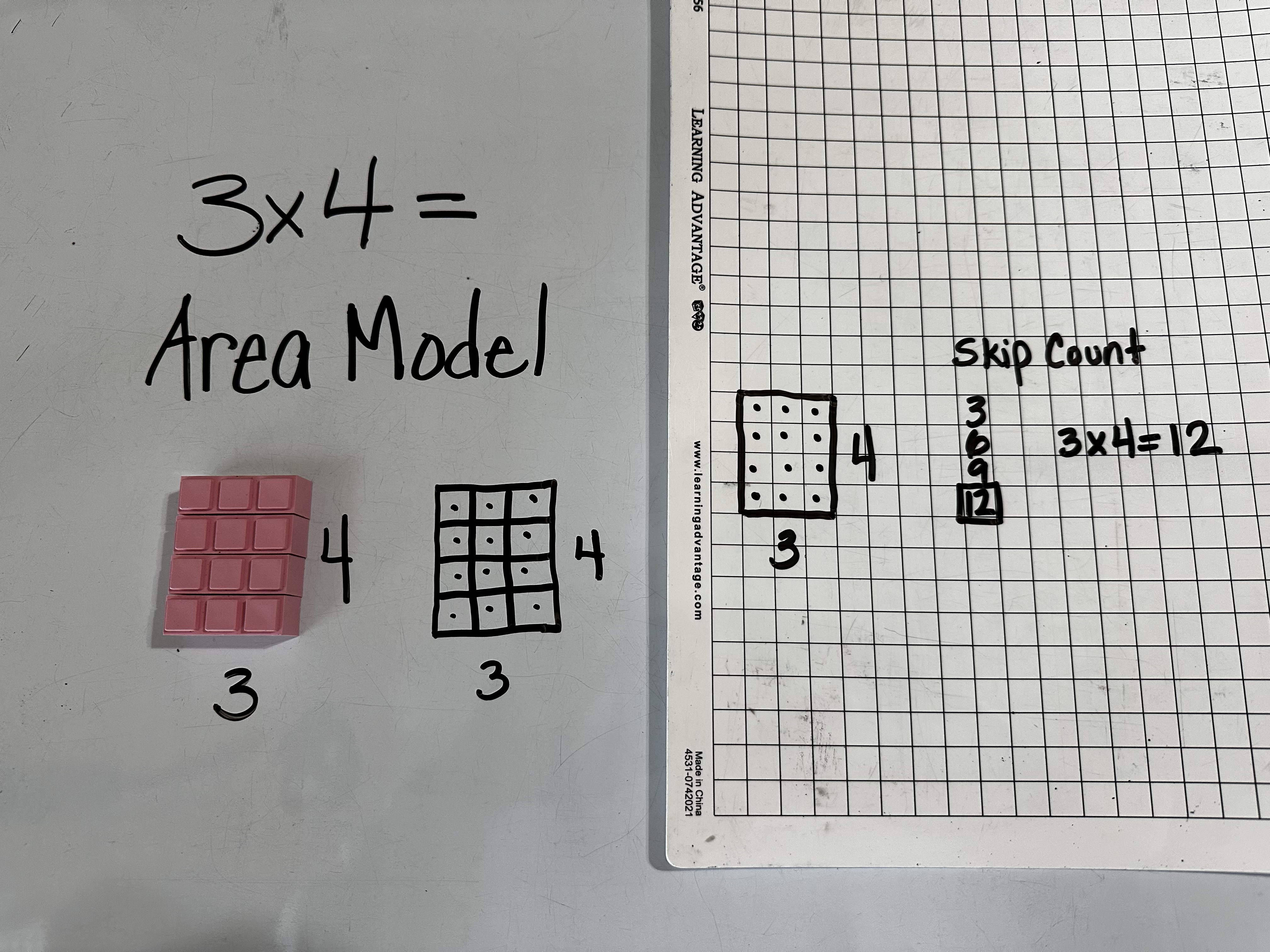
Not all math tutors are equipped to work with dyscalculia. A tutor who re-teaches classroom content using the same methods that have not been working is unlikely to produce meaningful results. What you are looking for is someone specifically trained in dyscalculia and multisensory math instruction.
A qualified dyscalculia specialist will understand dyscalculia as a neurological difference rather than a motivation or effort problem. They will use a structured, sequential approach that builds from concrete understanding to abstract concepts, working at the foundational level to fill gaps rather than pushing forward with grade-level content. They will track progress carefully and adjust instruction based on what each student needs, and they will communicate regularly with parents about what they are working on and why.
When speaking with a prospective tutor, ask directly about their training and experience with dyscalculia specifically. General math tutoring and dyscalculia intervention are different skill sets, and it is reasonable to ask for specifics before committing.
The earlier specialized intervention begins, the better, though students at every age and stage can make meaningful progress with the right support.
You Do Not Have to Figure This Out Alone
Navigating a dyscalculia diagnosis is a process, and it takes time to put all the pieces in place. The steps above give you a clear starting point, but you do not have to work through them without guidance.
If you have questions about what comes next for your child specifically, we offer a free consultation to help families understand their options and find the right path forward.
Schedule a free consultation →
At Exponential Potential, we specialize exclusively in dyscalculia tutoring using the CRA multisensory method. We work with students from first grade through college, online, across the US.


