Contact Us
Blog
Your Child's Neuropsychologist Recommended Multisensory Tutoring — Here's What That Means
You just left your child's neuropsychologist appointment with a diagnosis, a report, and a recommendation: multisensory tutoring. Maybe you wrote it down. Maybe you're not entirely sure what it means.
That's okay. Most parents aren't familiar with the term, and neuropsychologists don't always have time to explain it fully. This post will walk you through what the recommendation actually means, what to look for in a tutor, and why this approach works so well for kids with dyscalculia.
Why Neuropsychologists Recommend Multisensory Instruction
Neuropsychologists who evaluate children for learning differences understand how dyscalculia affects the brain. They know that traditional math instruction (memorizing procedures, drilling facts, watching a teacher work problems on a board) does not build the kind of deep numerical understanding that kids with dyscalculia need.
Multisensory instruction works differently. Instead of asking a child to absorb math through one channel, it engages multiple senses at once: touch, sight, movement, and sometimes sound. When a child can hold a concept in their hands before they are asked to picture it in their mind, and picture it in their mind before they are asked to write it as an equation, the learning sticks in a way that passive instruction cannot achieve.
Your child's neuropsychologist made that recommendation because the research supports it. It is the same reason structured literacy approaches like Orton-Gillingham are used for dyslexia. The method is designed to match how the brain actually learns.
What Multisensory Tutoring Actually Looks Like
Multisensory tutoring is not just using colorful manipulatives or making math more enjoyable. It is a structured, research-based approach. When done well, it follows a specific progression called the Concrete-Representational-Abstract method, or CRA.
Here is how it works:
Concrete. The student works with physical objects (base 10 blocks, Cuisenaire rods, counters, or other hands-on tools) to build a real understanding of the concept. They are not memorizing steps. They are experiencing the math with their hands.
Representational. Once a concept is solid at the concrete stage, the student moves to drawing or sketching it. This creates a visual bridge between the object in their hands and the symbol on the page.
Abstract. Only when the concept is genuinely understood does the student work with numbers and symbols in the traditional sense.
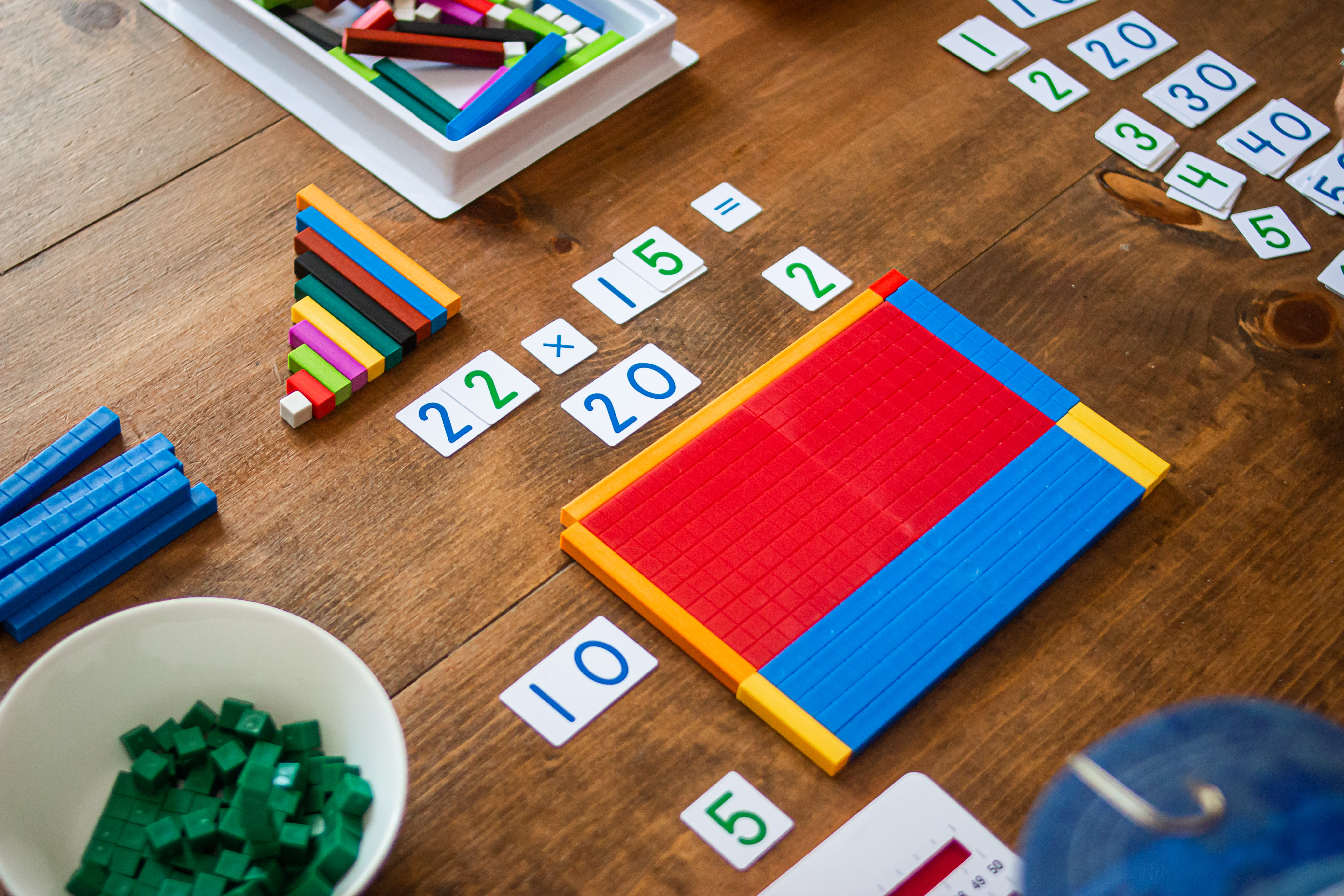
This progression matters because it mirrors how mathematical understanding actually develops. Skipping straight to the abstract stage (which is what most classroom instruction does) leaves kids with dyscalculia without the foundation they need to make sense of what they are doing.
Not All Tutors Are the Same
The word "tutor" covers a wide range of approaches. A math tutor who re-teaches classroom content using the same methods that were not working is unlikely to produce the results your neuropsychologist is hoping for.
What you are looking for is a tutor specifically trained in dyscalculia and multisensory math instruction. When you speak with a prospective tutor, it is worth asking directly about their training and methodology. A qualified specialist will:
Understand dyscalculia as a neurological difference, not a motivation or effort problem
Be trained in a structured, sequential math intervention rather than general tutoring
Use the CRA method consistently across sessions
Track progress and adjust instruction based on each student's needs
This is a specialized skill set, and it is reasonable to ask for specifics before getting started.
What Progress Looks Like
It is important to go in with realistic expectations. Dyscalculia is a neurological learning difference that responds to consistent, well-structured intervention over time. This is not a quick fix, and it is not supposed to be.
What families typically notice first is not a jump in grades. It is a shift in how their child relates to math. Less avoidance. Less anxiety. A willingness to try. Those changes often come before the academic gains, and they matter just as much.
With the right support, students with dyscalculia can build genuine mathematical understanding, not just workarounds, but real competence. That is what dyscalculia tutoring is designed to do.
Where to Go From Here
If you would like to understand the multisensory approach in greater depth before reaching out to a specialist, a good next step is to read "What Is Multisensory Learning?" How It Helps Kids with Dyscalculia. It explains the research behind the method and what it looks like in practice.
When you are ready to talk specifically about your child, we offer a free consultation to help families determine whether our program is the right fit. There is no pressure and no commitment.
At Exponential Potential, our tutors are trained in the CRA method and specialize exclusively in dyscalculia. We work with students from first grade through college, online, across the US.

We love hearing from families who are ready to take the next step in supporting their child's math journey. Whether you have questions about dyscalculia, want to learn more about our multisensory approach, or are ready to schedule a free consultation, we're here to help. Every family's situation is unique, and we look forward to learning about yours.


